Article 1
What are the potential impacts of climate change for the UK?
This Q&A is part of the Guardian's ultimate climate change FAQ
 Email
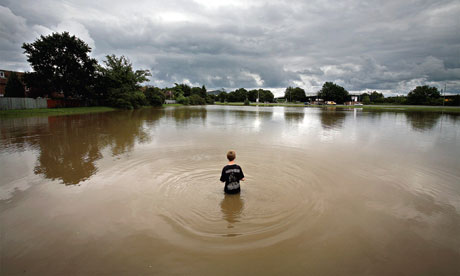
Flooded playing fields in Thatcham, Berkshire, in July 2007. Photograph: AFP/Getty Images
Temperatures in the UK have risen by about one degree since the 1970s and, given the levels of greenhouse gas already in the atmosphere, further warming is inevitable over the next three decades or so. The amount of warming will depend on future emissions but even if emissions are cut quickly and sharply to avoid dangerous levels of climate change, there will be some unavoidable impacts that the UK will have to adapt to.
The government's latest climate change risk assessment identifies flood risk, and particularly flooding from heavy downpours, as one of the key climate threats for the UK, alongside stresses on water resources, threats to biodiversity and natural habitats, and the repercussions for the UK from climate change impacts abroad.
Computer models that simulate the climate suggest that, as a result of warming, extremely wet winters could become up to five times more likely over the next 100 years, with more intense downpours in the winter months driving a greater risk of flash floods and river flooding, alongsiderisks from sea-level rise. Extreme flood events such as those in the summer of 2007 could become more frequent and severe, putting homes, businesses and infrastructure at greater risk. The government estimates that annual damages from flooding alone could increase to between £2bn and £12bn by the 2080s, an increase of about two to 10 times compared with current-day estimates. Critical infrastructure, including water-pumping stations, water treatment works, transport and electricity systems, and schools and hospitals sited in flood-risk areas could also be threatened, while heavy rainfall events could increase the risk of water contamination should sewers overflow. Current government estimates suggest about 330,000 properties are currently at risk of flooding, and climate change could increase this to between 630,000 and 1.2m by the 2080s.
Conversely, the models suggest that the UK could experience warmer, drier summers in the future. While that may bring some benefits, it could mean increased risk of drought, and extreme events such as the 2003 heatwave could be the norm by the end of this century. Heatwaves could also heighten pressure on healthcare services, because older populations are more vulnerable to extreme heat, and impact on transport, as higher summer temperatures bring the threat of rail buckling and associated travel delays.
The UK could also face threats to its water security and supply. Declining summer river flows, reduced groundwater replenishment and increased evaporation could all contribute to water loss, which could result in water shortages and restrictions on usage. The government estimates that 27-59 million people could be living in areas affected by water supply deficits by the 2050s, even before considering increasing populations and rising water demand.
Ecosystems are also highly vulnerable to climate change, which can aggravate existing stress factors such as pollution, land conversion and invasive non-native species. While some species could benefit from climate change, far more are set to lose out, according to the latest government estimates.
The UK may see changing patterns of wildlife and plants as species try to adapt by moving northwards, or have to compete with new non-native species. Habitats may come under increasing pressure – from salt marsh threatened by sea-level rise to beech woodland susceptible to summer droughts. Species could also experience reduced food supply if earlier breeding periods are at odds with the food available at the time.
None of the model predictions are certain. There is a lot that science does not yet know, and wider social and economic trends will also affect the UK's vulnerability to the effects of climate change. These range from an ageing population – with greater vulnerability to extreme heat – to population growth and increasing household and industry demand for water, which is expected to be 5% higher by 2020 compared with today. With 13% of new homes built since 2000 constructed on floodplains (that's about 10,000–16,000 new homes a year), planning decisions are another factor that can worsen the UK's existing vulnerabilities.
Recent reports by the UK Government Foresight programme and PWC suggest that the impacts of climate change outside the UK could have a larger effect on the British economy than the impacts felt within the country. If, for example, climate impacts led to international instability or reductions in the supply raw materials or commodities, the UK could experience effects ranging from increased food price volatility (if crop patterns change globally) to changing migration patterns as environmental refugees move from areas affected by extreme weather events.
Nevertheless, the UK could see some gains from climate change. While summer deaths could increase given the predicted increase in hot days and heatwaves, the country could see a fall in the number of cold-related deaths – estimated to be in the region of 3,900 to 24,000 premature cold deaths avoided each year by 2050. Providing water is available in sufficient supply, the UK could also see new crop types, or increased yields of crops such as wheat or sugar beet. For some areas of the UK, climate change could also offer wider opportunities for tourism. And for wildlife warmer temperatures could increase survival rates for offspring born in winter.
As with climate predictions, there are still many uncertainties over the extent and distribution of climate impacts. Model predictions are based on a number of assumptions about factors ranging from future rates of warming and economic growth to the technological and social achievability of different levels of emissions cuts. Regional impacts are particularly difficult to predict, though some work has been done to map the risks in different areas of the UK. For example, see this map (p329).
Climate policy to cut global greenhouse gas emissions could have a tangible effect on future climate impacts, not only offering governments a way to avoid the most extreme impacts, but also providing them with more time to prepare and adapt to those that are unavoidable.
• This article was written by Naomi Hicks and Dr Nicola Ranger at theGrantham Research Institute on Climate Change and the Environmentat LSE in collaboration with the Guardian
This article is about how the government wants to establish a policy to cut global greenhouse gas emissions and how this can have a possible effect on climate change.
Article 2


