As America's first black president makes a historic visit to the UK, Tom Clark looks at what effect increasing ethnic diversity has on social harmony this side of the Atlantic
About the most certain prediction we can make of any developed country is that it will be more ethnically diverse in a few decades' time than it is today. The magnetic pull of the rich world is such that slamming the gates is probably not possible, but even if it could be done, immigrants already in the west are set to have enough children to represent a growing population share for a time to come.
This week, Barack Obama is visiting the UK. The first black president of the US is an apparent symbol of American comfort with diversity, and a prompt for wondering whether the UK is similarly at ease. For the last few months, I have been writing a book with a team of researchers - led by Harvard professor Robert Putnam - who have been trying to find out. Despite the undoubted economic and cultural gains from diversity, it transpires that it does put certain strains on community life, on both sides of the Atlantic - especially when politicians exploit the unease.
With electric blue eyes and a prophet's beard, Putnam stands out as a man drawn to big ideas, at a time when university life is ever more specialised. He made headlines around the world in 2000 with his book, Bowling Alone, which looked at everything from bridge clubs to PTAs to reach its conclusion that community life in the US was withering on the vine.
Despite that grim verdict, he brims with the conviction that societies can turn themselves around, and his work has won the attention of politicians ranging from Obama to Muammar Gaddafi. He has now teamed up with Manchester University for a £5m five-year project to examine the vast forces that are reshaping society in the UK and the US. Studies on the feminisation of working life and the gulf between pious America and secular Europe will follow on from the work on immigration.
Remarkable transformation
Diversity has run much further in America than Britain; there, as many as one in three citizens belong to one ethnic minority or another. In the UK, the figure is around 10%, or slightly more if groups such as the Irish are included. But even this figure is a remarkable transformation when it is recalled that the non-white population was vanishingly small until the Empire Windrush docked in Tilbury in 1948, bringing the first large group of West Indian immigrants to the UK a mere two generations ago. More pertinently, the proportion has been growing fast. The credit crunch has temporarily depressed the inflow of arrivals, but before long it will probably pick up again.
A flick through a children's history book is enough to inspire speculation about differences in the way America and Britain will handle the transformation. The Statue of Liberty is the symbol of an immigrant nation, whereas fusty myths of British tradition concern an island people fending off all comers since 1066. Indeed, it turns out that, in many respects, American immigrants fare better - finding work more easily and enjoying better health than new arrivals in the UK.
With race, the story is different, thanks to the poisonous legacy of American slavery. The African-American population is more ghettoised and suffers worse health than almost any section of US society. Despite warnings by Trevor Phillips, chair of the Equality and Human Rights Commission, about Britain sleepwalking into segregation, the census reveals that there are few true British ghettos.
The most keenly anticipated findings concern the effect of racial diversity on community life. Two years have passed since Putnam - a staunch progressive who still believes immigration is, in general, a force for good - sparked controversy with research that showed diversity tended to weaken trust and active citizenship. Surprised by the result, he adjusted the analysis to take account of every feasible alternative explanation, including inequality, poverty and neighbourhood turnover. But whatever else was factored in, the diversity effect remained.
"It was not," he says, "that diverse neighbourhoods were beset with racial tension. Rather, it seemed people responded to living in a mixed area by 'hunkering down', withdrawing from the social world as a whole - including from interaction with people of their own colour - like shy turtles retreating into their shells."
Is the same thing happening in Britain? Ed Fieldhouse, professor of social and political science at Manchester University, has led the research at the British end, applying a similar methodology in both countries at once. He found the adverse link between diversity and community-mindedness applied in the UK too, but was much less powerful. In America, diversity proved almost as corrosive as poverty, while in the UK the impact was more modest, akin to the effect of an increase in turnover among the local population.
The transatlantic contrast may reflect different dividing lines in the two societies. Racial identity has historically loomed large in American thinking, whereas in the UK the class cleavage traditionally counts more. That could conceivably result in Americans hunkering down more in the face of racial diversity, although this remains somewhat speculative, and Putnam stresses that more work is needed on this point.
But even if modest, the adverse reaction to diversity was still there in Britain, and Fieldhouse wanted to understand its nature. To do so, he focused on the minority ethnic population itself, to see whether it reacted in the same way as the white majority. He discovered it does not: for non-white individuals, being exposed to diversity has little impact on attitudes such as trust. "At first, we weren't sure whether this was because minorities faced less prejudice in mixed areas, or whether instead it was because diverse neighbourhoods more often provided the chance to live alongside others from their own particular ethnic group," says Fieldhouse.
As it turned out, the second explanation was correct. Once the greater scope for, say, Pakistanis to live alongside other Pakistanis in diverse areas is discounted, they hunker down in the face of diversity in much the same way as white people.
So it seems that it is the desire to live with one's kith and kin that explains why diversity strains social solidarity. The difference in the British and American results, however, demonstrates that this desire is more a matter of conditioning than immovable instinct.
Putnam points out that when he was a teenager of Methodist stock in the 1950s, Jewish and Catholic girls were not seen as feasible dates. "Religion was an important dividing line back then," he says. "But by the 1980s,when my own kids were at high school, it was seen as so incidental that they were no more concerned with their classmates' faith than whether they were left- or right-handed."
Social division
If religion has ceased to be a source of social division, Putnam says, there is no reason in principle why ethnicity should not in time cease to divide as well. "In fact," he adds, "evidence uncovered in our research shows that on both sides of the Atlantic younger generations are growing steadily more comfortable with racial diversity than their elders."
The election of an African-American president, unthinkable a generation ago, only confirms that the process is well under way. (With one white parent, it might be argued that Obama is not "truly black".
The fact that he is almost always described as such, and identifies himself that way, is another reminder of the reality that racial categories are socially constructed, rather than god-given).
But if shifting political winds can snuff out discomfort, they can also greatly inflame it. One chapter in Putnam's new book, to be published later this year, will be dedicated to exploring what happens when political debates turn against immigrants. The Conservatives' 2005 election campaign is a case in point. They plastered two slogans on one poster - "It's not racist to talk about immigration" and "Are you thinking what we're thinking?" - that together pulled off the brazen trick of linking race and migration in the electorate's mind, while insisting that they were separate.
The effect? The proportion of the electorate ranking immigration or asylum as their top concern increased by two-thirds during the campaign. There is little need for the usual caveats about unpicking cause and effect; this finding was established by asking the same people the same question immediately before and immediately after the campaign. American analysis confirms that anxiety about immigration is shaped more by media coverage than objective demographics.
The political mood music also determines which particular immigrants bear the brunt of resentment. In 1980s Britain, news reports often linked West Indians with crime and disorder, partly due to the Brixton riots. And back then, living in African-Caribbean neighbourhoods, though not South Asian ones, fuelled anxiety about immigration. Twenty years on, the media's treatment of Muslims after 9/11 has turned the heat on to them instead.
Long view
So the message of Putnam's research comes in two parts: first, diversity currently imposes strains on society; but, second, there is no inevitable reason why it should. Taking the long view, he reflects on the big social changes of the past, such as the industrial revolution - which was cradled in Manchester.
"Initially, life expectancy fell and the quality of life declined," Putnam explains. "But people did not go back to the villages. They stayed in the cities, devised new arrangements for public sanitation and so on, and ended up much better off than before. Greater diversity is one of the revolutions of our own time. It will no more be reversed than industrialisation. The challenge is to find ways to make a success of it."
A lack of multi-cultural play at a nursery has been punished by Ofsted[GETTY/MODEL USED]
Stunned staff were also rebuked for not using self-evaluation forms well enough but were praised for the bond they have with the children.
The pre-school centre was rated as “requiring improvement” in Ofsted’s latest report. It claimed that children’s understanding of the world was not being developed.
Angry parents protested at what they saw as unfairness and a case of political correctness gone mad. One mother said: “It’s ridiculous that a superb nursery is being downgraded over something as silly as this.”
Another disgusted parent said: “They are being ticked off for not filling in self-assessment forms well enough. Yet they are highly praised for how they look after the children and how they bond with them. That to me is far more important than filling in a few official forms.
We just didn’t have all our multi-cultural posters out in that area on the day of the inspection
Nicola Martin, owner
Ofsted inspector Clair Stocking told staff: “There are few multi-cultural resources, particularly in the role play area, that reflect a range of cultures and backgrounds to promote understanding of the world.”
The overwhelming majority of under-fives at Rascals Childcare centre in Rayleigh, Essex, are from a white British background but parents said staff were “constantly doing projects” to teach about Diwali and other world religious festivals.
Owner Nicola Martin said the nursery believed it made enough efforts to teach children about multi-culturalism and even had a Chinese New Year display on its wall when the inspection was carried out.
She said: “We have facilities for teaching multi-culturalism. We have posters and puzzles depicting other backgrounds. We hand out multi-cultural food. We just didn’t have all our multi-cultural posters out in that area on the day of the inspection. None of the parents have raised concerns.
“They’ve just noticed the staff have been praised. I was concerned the whole business took two-and-a-half hours. It was rather quick. Some of the things they say are vague.”
The pre-school centre, previously rated as “good”, has also been marked down because of lower-than-expected standards of planning.
Yet it was praised for pupils’ good behaviour and safety standards. Staff were also praised for the support they gave several children who do not speak English as their first language.
One parent who asked not to be named said the nursery could not give a better level of care. She said: “Staff are very diligent about making sure that the children learn about cultures from all over the world. The Chinese New Year project was a big learning experience.
“I am not quite sure what else they could possibly be required to do.”
Another mother said: “School cookery classes involve recipes from all over the world and the healthy meals they are given include food from different cultures. The staff talk about the food, explaining its origin.”
The downgrade means that the nursery will now be monitored and inspected again within 12 months.
Ofsted said: “Inspection arrangements for early years providers look at seven areas of learning, one of which is understanding the world.
“Inspectors will use their expertise in the field of childcare in considering how well a provider meets children’s needs in this respect.”
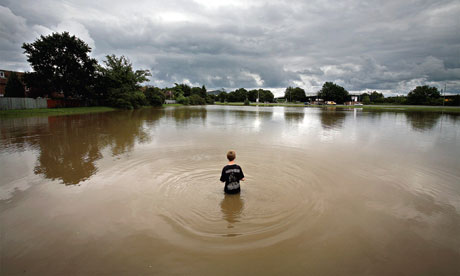
Flooded playing fields in Thatcham, Berkshire, in July 2007. Photograph: AFP/Getty Images
Temperatures in the UK have risen by about one degree since the 1970s and, given the levels of greenhouse gas already in the atmosphere, further warming is inevitable over the next three decades or so. The amount of warming will depend on future emissions but even if emissions are cut quickly and sharply to avoid dangerous levels of climate change, there will be some unavoidable impacts that the UK will have to adapt to.
The government's latest climate change risk assessment identifies flood risk, and particularly flooding from heavy downpours, as one of the key climate threats for the UK, alongside stresses on water resources, threats to biodiversity and natural habitats, and the repercussions for the UK from climate change impacts abroad.
Computer models that simulate the climate suggest that, as a result of warming, extremely wet winters could become up to five times more likely over the next 100 years, with more intense downpours in the winter months driving a greater risk of flash floods and river flooding, alongsiderisks from sea-level rise. Extreme flood events such as those in the summer of 2007 could become more frequent and severe, putting homes, businesses and infrastructure at greater risk. The government estimates that annual damages from flooding alone could increase to between £2bn and £12bn by the 2080s, an increase of about two to 10 times compared with current-day estimates. Critical infrastructure, including water-pumping stations, water treatment works, transport and electricity systems, and schools and hospitals sited in flood-risk areas could also be threatened, while heavy rainfall events could increase the risk of water contamination should sewers overflow. Current government estimates suggest about 330,000 properties are currently at risk of flooding, and climate change could increase this to between 630,000 and 1.2m by the 2080s.
Conversely, the models suggest that the UK could experience warmer, drier summers in the future. While that may bring some benefits, it could mean increased risk of drought, and extreme events such as the 2003 heatwave could be the norm by the end of this century. Heatwaves could also heighten pressure on healthcare services, because older populations are more vulnerable to extreme heat, and impact on transport, as higher summer temperatures bring the threat of rail buckling and associated travel delays.
The UK could also face threats to its water security and supply. Declining summer river flows, reduced groundwater replenishment and increased evaporation could all contribute to water loss, which could result in water shortages and restrictions on usage. The government estimates that 27-59 million people could be living in areas affected by water supply deficits by the 2050s, even before considering increasing populations and rising water demand.
Ecosystems are also highly vulnerable to climate change, which can aggravate existing stress factors such as pollution, land conversion and invasive non-native species. While some species could benefit from climate change, far more are set to lose out, according to the latest government estimates.
The UK may see changing patterns of wildlife and plants as species try to adapt by moving northwards, or have to compete with new non-native species. Habitats may come under increasing pressure – from salt marsh threatened by sea-level rise to beech woodland susceptible to summer droughts. Species could also experience reduced food supply if earlier breeding periods are at odds with the food available at the time.
None of the model predictions are certain. There is a lot that science does not yet know, and wider social and economic trends will also affect the UK's vulnerability to the effects of climate change. These range from an ageing population – with greater vulnerability to extreme heat – to population growth and increasing household and industry demand for water, which is expected to be 5% higher by 2020 compared with today. With 13% of new homes built since 2000 constructed on floodplains (that's about 10,000–16,000 new homes a year), planning decisions are another factor that can worsen the UK's existing vulnerabilities.
Recent reports by the UK Government Foresight programme and PWC suggest that the impacts of climate change outside the UK could have a larger effect on the British economy than the impacts felt within the country. If, for example, climate impacts led to international instability or reductions in the supply raw materials or commodities, the UK could experience effects ranging from increased food price volatility (if crop patterns change globally) to changing migration patterns as environmental refugees move from areas affected by extreme weather events.
Nevertheless, the UK could see some gains from climate change. While summer deaths could increase given the predicted increase in hot days and heatwaves, the country could see a fall in the number of cold-related deaths – estimated to be in the region of 3,900 to 24,000 premature cold deaths avoided each year by 2050. Providing water is available in sufficient supply, the UK could also see new crop types, or increased yields of crops such as wheat or sugar beet. For some areas of the UK, climate change could also offer wider opportunities for tourism. And for wildlife warmer temperatures could increase survival rates for offspring born in winter.
As with climate predictions, there are still many uncertainties over the extent and distribution of climate impacts. Model predictions are based on a number of assumptions about factors ranging from future rates of warming and economic growth to the technological and social achievability of different levels of emissions cuts. Regional impacts are particularly difficult to predict, though some work has been done to map the risks in different areas of the UK. For example, see this map (p329).
Climate policy to cut global greenhouse gas emissions could have a tangible effect on future climate impacts, not only offering governments a way to avoid the most extreme impacts, but also providing them with more time to prepare and adapt to those that are unavoidable.
This article is about how the government wants to establish a policy to cut global greenhouse gas emissions and how this can have a possible effect on climate change.
Every time the weather does something, somewhere, we break out into the same argument, about what it means for the climate change debate. Cold weather in the US, hurricanes in the Philippines, droughts and heatwaves in Australia, and, of course, drenching storms in Britain: is it caused by (or does it disprove) anthropogenic climate change?
I want, therefore, to make the obvious point: the world is a big place and the climate is a complicated system. At any time, somewhere in the world, somewhere will be experiencing "the worst X in 100 years" or "the longest Y since records began" or "the wettest Z since the Second World War". That's always going to be the case, and the fact that we happen to be the place that is experiencing it at the moment does not mean that we can extrapolate globally, any more than if I won the lottery I could say that everyone in Britain has just become a millionaire.
What's interesting, then, is not whether any particular place is undergoing some spectacular climatic event, but whether those events are becoming more common in general, worldwide.
It concluded that "It is premature to conclude that human activities – and particularly greenhouse gas emissions that cause global warming – have already had a detectable impact on Atlantic hurricane activity." Similarly a 2010 World Meteorological Organisation study found only a very slow increase over centuries, and was unable to “conclusively identify anthropogenic signals” (ie human causation). Whatever else we're doing to the climate, we can't reliably say we're making more storms.
Unfortunately, we have a tendency to extrapolate from our own experience. That's why people who've been mugged tend to think that crime is up, and people who have a bad time in hospital tend to think that the NHS is getting worse, and people who meet rude kids tend to think that the kids today have no respect. So the fact that Britain's had a strange few years of weather makes people assume it's global warming. But that's no better than the Donald Trumps of this world who say "it's snowing here SO MUCH FOR GLOBAL WARMING". We need to look at global trends, and globally, there hasn't been a significant increase in the number of storms.
This isn't to say that global warming hasn't had noticeable effects on extreme weather. Worldwide, heatwaves have become more common; a study in the journal Climatic Change found record-breaking monthly average temperatures are five times as frequent as they were in 1900 – and that almost certainly is caused by human activity. We can't say that the Australian heatwave of recent weeks is caused by it, because that's not how probability works, but we can say that global warming made it more likely.
Observed record ratio (the increase in the number of heat records compared to those expected in a world without global warming) for monthly heat records as it changes over time (thin red line is annual data, thick red line smoothed with half-width 5 years). Blue line and area is predicted change with uncertainties. Pic: Skeptical Science. Click to enlarge
But the storm that just battered Britain, and the others that hit us in December, are not part – as far as we can tell – of a wider trend. It's just a storm.
This article is about the debate on the British society on global warming. How many people think that rains and storms and heat waves are all causes of global warming, yet again, we have to evaluate the previous trends to speculate if it's due to climate change and global warming.


 Email